
Understanding and Defending Your Marginal Time
The limits to your finite time are closer than they may appear

You know your time is finite, but how much time do you actually have to work with?
From a big-picture view, your, let’s say, 50 hours per week can seem like a pretty big time budget. Now you get an invitation to a new weekly 30-minute meeting. That’s just 1% of your total time budget, so, maybe that sounds like an easy yes.
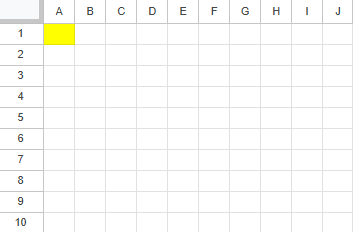
When you or your colleagues think that way about your time, you’re falling victim to what I’ll call the optimistic denominator bias. While a half hour per week is a small percentage of your total time budget (1% of your 100 half hours per week), it’s a much larger percentage, often above 10%, of your marginal time budget: the time you actually have flexibility on and control over.
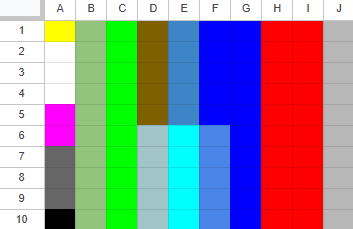
Here’s a more typical view of what this new 30-minute meeting is actually up against, and suddenly that seemingly innocuous single yellow square is taking away not 1/100th but 1/4th of your remaining available average time per week:
There is much to ponder to truly understand your real denominator to overcome your own bias in knowing your time budget – as well as in how others perceive how relatively large their pulls on your time actually are. It’s hard for one to see oneself without careful thought, so your well-meaning colleagues will have even worse visibility into how much time you have to help them.
Understanding Your Marginal Time Budget
In most white-collar work, a variety of administrative burdens, meetings, communications, and time spent planning work can fill most of your week. Some of these are more non-negotiable than others – you can’t do much about how long you spend eating, commuting, or being out of office.
Here’s my personal breakdown (as visualized above, with colors as noted below) of where I would find the hours in my week going when I worked full-time, sorted from most unchangeable to least:
1% Sick time at a minimum, and higher for some life circumstances (black)
3% Vacation (dark gray)
10% Commuting to clients (dark green)
5% Lunch and other short breaks (brown)
15% Meetings - Clients (dark blue)
10% Emergent Important Work - Ad Hoc on emergent work of the highest importance and urgency (light green)
5% Meetings - Direct Reports (light blue)
10% Deep Work - Planned high-importance work with short-term turnarounds (light gray)
20% Email & Slack, including miscellaneous administrative work such as expense reports and annual reviews (red)
5% Meetings - Working 1:1 with Teammates (another blue)
5% Lower-Importance Work- Routine designing and building work core to my projects (light purple)
5% Meetings - Team-level & all-hands (another blue)
2% Meetings - Mentorship, exploratory, social & other serendipity (pink)
leaves me with 4% Marginal Time Budget (white/yellow)
The bottom rungs of that ladder above are where you’ll have to look to free up more time for new work, and they’re also the most viable places to be preemptively pruning. But there’s some minimum viable amount of time that meetings and emails will take.
Bottom line, your marginal time budget is going to end up far under 100%. How much marginal time you have at any given moment in your career will track closely to how overwhelmed and unable to get any “real work” done you feel. I’ll tell you, 4% doesn’t feel great. But even 40% is a lot tighter than 100%.
So, what can you do about it?
Put it into Practice
Getting a handle on your marginal time budget can be a daunting proposition, but you can kick-start your thinking by calibrating, conveying & compromising.
Calibrate
First, you need to see yourself and know your marginal time budget. You don’t need to get everything exact for this to be a useful first step:
Sketch out a rough breakdown of your version of my time budget above. Estimate wherever you have to, but you know how long your travel takes, how many days off you take, and you can count your meetings on the past few weeks of your calendar.
Stack rank your time per week per activity based on how non-negotiable they are. What are your “bottom rungs”?
Your time budget will shift as your responsibilities change. Consider occasionally doing brief audits of your time. Just measuring how long you spend on e.g. email and Slack for a few days can give you a better estimate.
Convey
Next, show your colleagues – and yourself – what you’ve learned:
Try time blocking your calendar for when you’ll tackle communications, deep work and administrative catch-up each week. The benefits are twofold:
Primarily, you’ll better see how truly scarce your marginal time is – your calendar will look more like the second grid than the first grid.
Secondarily, your colleagues will better grasp how busy you actually are when they’re looking for a meeting time with you.

Use this context to start saying no more often via Discussing and Defending against urgent but unimportant pulls on your time.
Know when and where you can flex extra time – during a week where I was surging on a high-importance and high-urgency project, I knew I could pick up another several hours per week by skipping my least important meetings and bottom tier of work.
Build a team culture around understanding how different people need different amounts of time for deep work and thus different amounts of meeting participation.

Compromise
Finally, bridge this into practical action:
You have likely just learned that your time is more finite than you thought. Bring a newfound zeal to finding things to stop doing.
Try a ”balanced budget” approach to taking on new meetings. Pick a number of hours per week of meetings you can afford alongside your other responsibilities. Work with your team to find ones to stop doing when new ones emerge.
Or try starting from a clean slate. Skip as many of your meetings for a week as you (practically) can. How much more productive did you feel? What type of work benefitted the most from that reclaimed time? Which meetings did you miss being in? Adjust your budget accordingly.
One more personal note, when I launched this newsletter, I knew it’d take a few hours of my time each week and planned accordingly, but, despite understanding my marginal time, even to me it still feels like I’m busier than I expected. The struggle is an ongoing one. I’m in it with you.
The subtle Arrested Development reference: 🏆